
In the fast-evolving world of global construction, steel structures have become a cornerstone of modern industrial and warehouse projects. From factories in Southeast Asia to logistics centers in Africa and storage facilities across South America, steel structures deliver the perfect balance of strength, cost efficiency, and design flexibility.
As international buyers look for reliable suppliers, understanding what a steel structure is, how it works, and why it’s a superior choice can help make smarter investment decisions. In this comprehensive guide, we’ll break down everything you need to know — from its components to its benefits and selection tips — to help you choose the right solution for your next project.
1.What Is A Steel Structure?
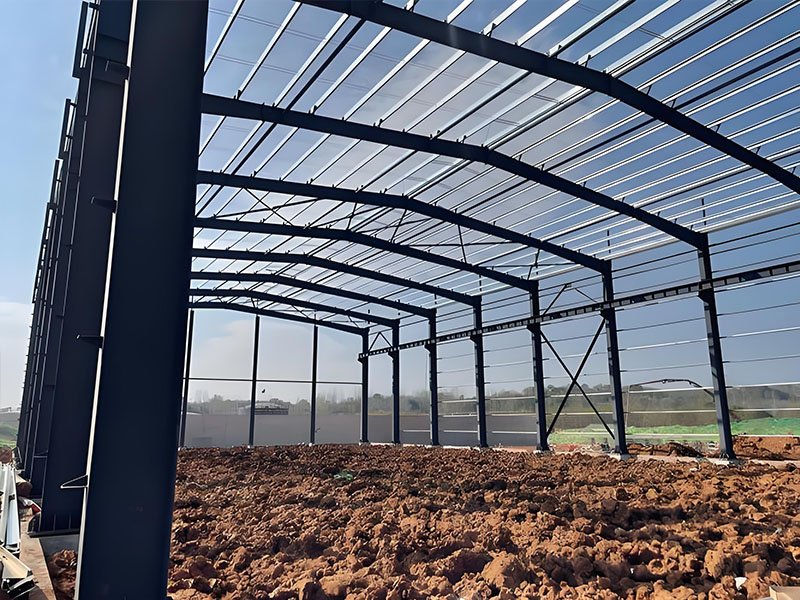
A steel structure is a building system made primarily from steel components that are fabricated and assembled to form the framework of a building. These components include columns, beams, trusses, and purlins, which work together to support loads and provide stability.
Unlike traditional concrete or brick buildings, steel structures are lightweight yet strong, quick to assemble, and highly durable against environmental stress such as wind, rain, or earthquakes.
In industrial and warehouse projects, steel structures often serve as the main framework for:
– Factory workshops
– Storage warehouses
– Logistics centers
– Power plants and manufacturing facilities
In short, a steel structure is the skeleton that carries your building’s strength and ensures long-term reliability.
2.What Are Functions of Steel Structure?
The primary function of a steel structure is to support and distribute loads safely to the foundation. However, its role goes far beyond that. Here are key functions that make steel structures the backbone of industrial construction:
2.1. Load-Bearing Function – It supports vertical and lateral loads, including the building’s weight, equipment, and environmental forces.
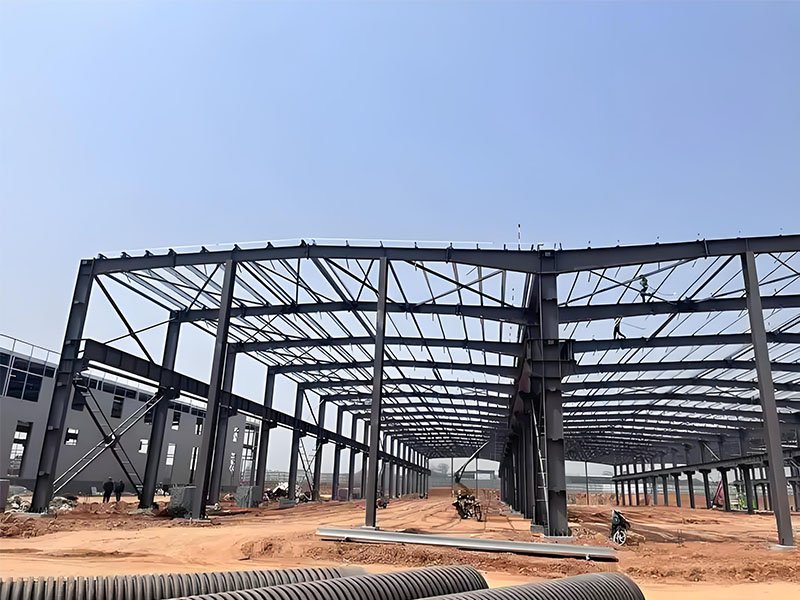
2.2. Flexibility in Design – Allows for long-span designs without internal columns, perfect for large open spaces like factories and warehouses.
2.3. Ease of Expansion – The modular design makes future extensions or modifications simple and cost-effective.
2.4. Safety and Stability – Engineered to resist deformation, seismic activity, and corrosion with proper coating and galvanization.
2.5. Aesthetic Integration – Modern steel structures can be designed with architectural appeal, integrating glass, panels, or cladding for better presentation.
3.What Are Key Components of a Steel Structure?
A steel structure is composed of several essential elements that together ensure strength, stability, and usability.
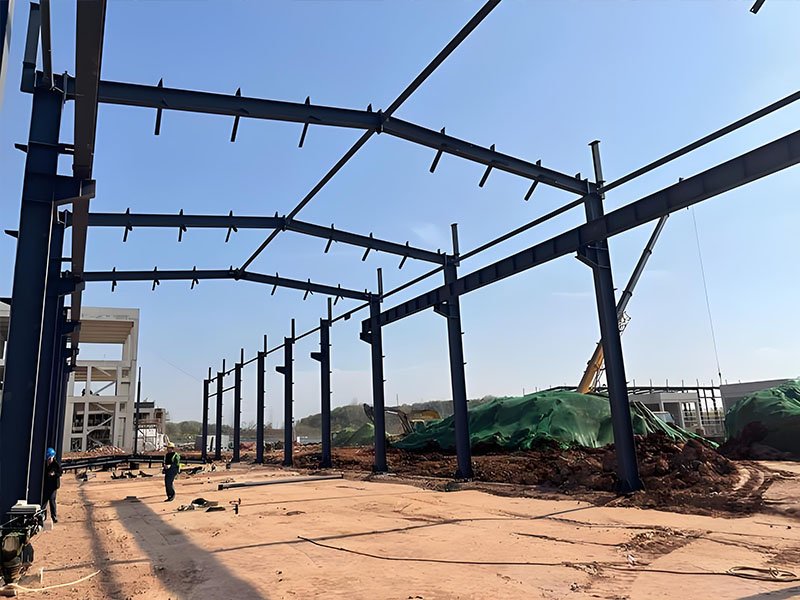
3.1. Main Frame Components
– Columns – Vertical supports transferring loads to the foundation.
– Beams – Horizontal members connecting columns and supporting the roof or floors.
– Bracings – Diagonal components to enhance stability and prevent sway.
3.2. Secondary Members
– Purlins & Girts – Support roof and wall panels.
– Tie Bars & Struts – Help maintain structural alignment.
3.3. Roof & Wall Systems
– Panels made from corrugated steel, sandwich panels, or other cladding materials that protect the interior.
3.4. Fasteners & Connectors
– Bolts, welding joints, and anchors ensure the precision and stability of the entire framework.
3.5. Foundation System
– Transfers the load of the steel framework to the ground safely.
4.How Does a Steel Structure Work?
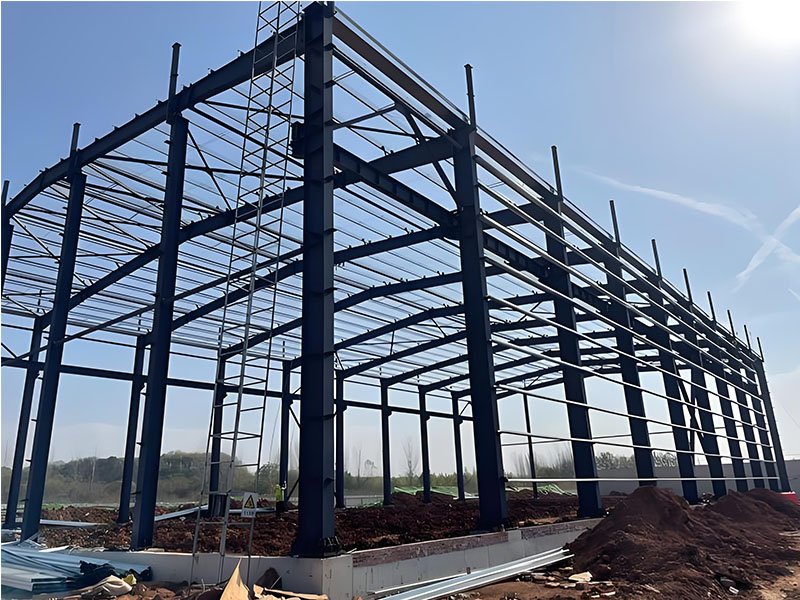
The working principle of a steel structure lies in its load distribution mechanism. When external forces (like gravity, wind, or equipment load) act on the building, the load is transferred through beams and columns to the foundation, distributing stress evenly and maintaining balance.
Here’s how the system operates step by step:
4.1. Load Transfer – Roof and wall panels collect and transfer loads to purlins and beams.
4.2. Structural Support – Beams transfer horizontal loads to columns.
4.3. Foundation Connection – Columns transfer vertical loads to the foundation.
4.4. Stability System – Bracing systems prevent deformation and resist lateral forces.
The efficiency of this design allows large warehouses or factories to maintain vast open interior spaces — no need for intermediate supports, which improves workflow and equipment layout.
5.What Are the Benefits of Steel Structure?
Steel structures are widely used worldwide because they offer a unique combination of advantages for industrial applications:
5.1. High Strength-to-Weight Ratio – Steel provides maximum load capacity with minimal material weight, making transportation and installation easier.
5.2. Faster Construction – Prefabricated components can be produced in a factory and assembled on-site quickly — reducing construction time by up to 50% compared with concrete buildings.
5.3. Cost-Effective Over Time – Though the initial investment might be slightly higher, the lower maintenance and longer lifespan of steel structures result in a lower total cost of ownership.
5.4. Durability & Weather Resistance – With proper galvanization or coating, steel resists corrosion, fire, and harsh weather conditions, extending service life beyond 30–50 years.
5.5. Eco-Friendly and Recyclable – Steel is 100% recyclable and supports green construction practices.
5.6. Design Flexibility – Suitable for both standardized warehouses and customized industrial complexes, offering architects and engineers endless possibilities.
Our company provides fully customizable steel structure solutions — from design and fabrication to installation — ensuring that every project meets local standards and customer expectations.
6.How To Choose the Right Steel Structure?
Choosing the right steel structure involves understanding your project’s needs and working with an experienced supplier. Here’s a quick guide:
6.1. Define Your Purpose – Identify whether it’s for storage, manufacturing, or logistics.
6.2. Check Load Requirements – Consider the type of machinery, cranes, or equipment that will be used.
6.3. Evaluate Environmental Conditions – Wind load, humidity, temperature, and seismic activity matter.
6.4. Choose the Right Material Grade – Galvanized or painted steel for standard use; stainless steel for coastal or chemical environments.
6.5. Ask for Custom Design Support – Work with suppliers who offer OEM/ODM customization, drawings, and installation guidance.
6.6. Compare Quality & Delivery Time – A reliable partner should offer both stable lead times and international certifications (ISO, CE, SGS).
At our company, we provide tailored solutions with precise engineering, fast delivery, and one-stop after-sales support — helping you complete projects on time and within budget.
7.Conclusion
Steel structures are redefining industrial construction around the world — combining strength, efficiency, and flexibility in one powerful system. Whether you’re planning a new factory in Vietnam, a logistics warehouse in Kenya, or an expansion project in Brazil, a well-designed steel structure can save time, reduce costs, and enhance long-term reliability.
When you partner with an experienced Chinese supplier, you gain access to customized designs, precision manufacturing, and on-time delivery that meet global standards.
Looking for a trusted partner for your next industrial or warehouse project? Contact our team today for a free consultation and quotation.
